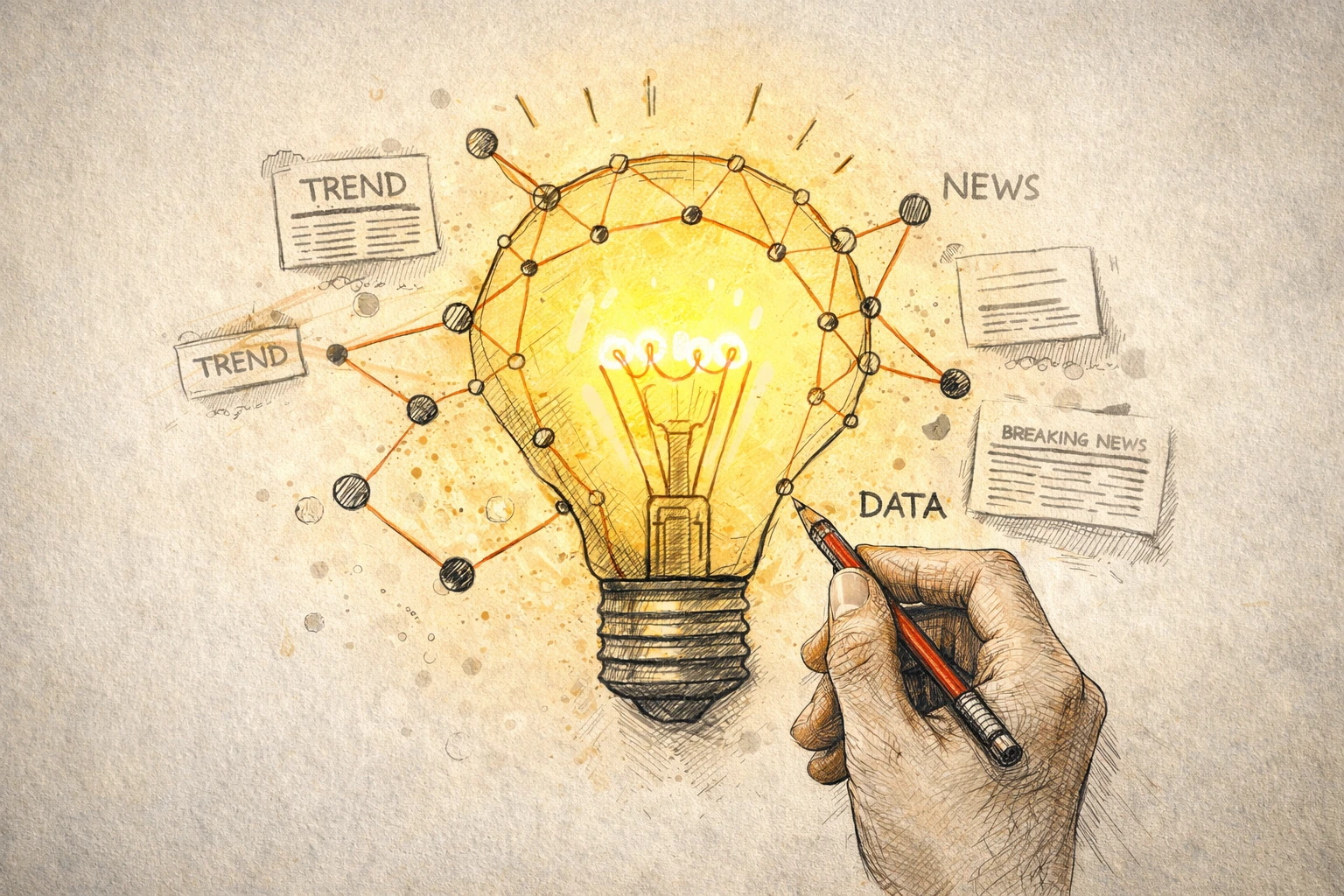
AI might be transforming PR, but some fundamentals will always remain, and that’s because there are some things AI can’t do.
Among them, two stand out in particular; strong relationships with the media and the ability to craft a compelling news hook. However sophisticated the tools become, these “old school” tactics continue to be the difference between coverage that lands, and coverage that doesn’t.
At its core, PR has always been about storytelling and trust.
Journalists are inundated with pitches daily, and what cuts through isn’t just a well-written press release, it’s credibility. That credibility is built over time through genuine relationships. Knowing how a journalist thinks, what they care about, and how they like to work cannot be automated, and AI cannot build rapport with people.
In an age where inboxes are flooded with templated outreach, a trusted contact who understands a journalist’s beat will always have an edge.
Relationships don’t just open doors, they help shape stories in a way that resonates with both the journalist and their audience.
The Power of a Strong News Hook
Alongside relationships sits the ever-critical news hook. A story without a clear, timely, and relevant angle simply won’t land, or certainly not in tier one media, no matter how polished the content is. The ability to identify what makes something newsworthy is both an art and a skill developed through experience.
It requires an understanding of timing, cultural context, audience interest, and editorial priorities. These are nuanced judgments that go beyond data points or keyword trends. A strong news hook is what transforms a piece of information into a story worth publishing, and ultimately, worth reading.
Where AI Fits In and Where It Falls Short
The rise of AI in PR is impossible to ignore. There’s no doubt that AI is rapidly improving at drafting content. From press releases to bylines it can produce clean, structured, and even persuasive copy at speed, and this capability will only continue to evolve.
But writing is just one piece of the puzzle. AI cannot build relationships in the human sense. It cannot read the tone of a conversation, adapt to subtle cues, or develop trust over time. Critically, it also cannot truly pitch to journalists in the way a seasoned PR professional can—bringing instinct, personality, and adaptability into the conversation.
Why Humans Still Spot the Best Stories
Perhaps more importantly, AI still struggles to consistently identify a genuinely strong news hook. While it can analyse patterns and suggest angles based on existing data, it lacks the human instinct that spots something unexpected, culturally resonant, or emotionally compelling.
Great PR often comes from lateral thinking. Connecting dots others haven’t, or reframing a story in a way that suddenly makes it click. Humans, with their lived experience and intuition, remain far better equipped to do this. They understand nuance, tone, and timing in a way that machines simply can’t replicate.
The Future of PR Is Built on Its Foundations
As PR continues to evolve, embracing new tools and technologies is essential. But evolution doesn’t mean replacement. The fundamentals of media relationships and sharp news judgment aren’t relics of an era lost in time, they are the foundation that everything else is built on.
In a world of increasing automation, these human-driven skills may not just remain relevant, they may become even more valuable. Because in the end, securing top-tier coverage isn’t just about efficiency it’s about connection, credibility, and telling a story that truly matters.